
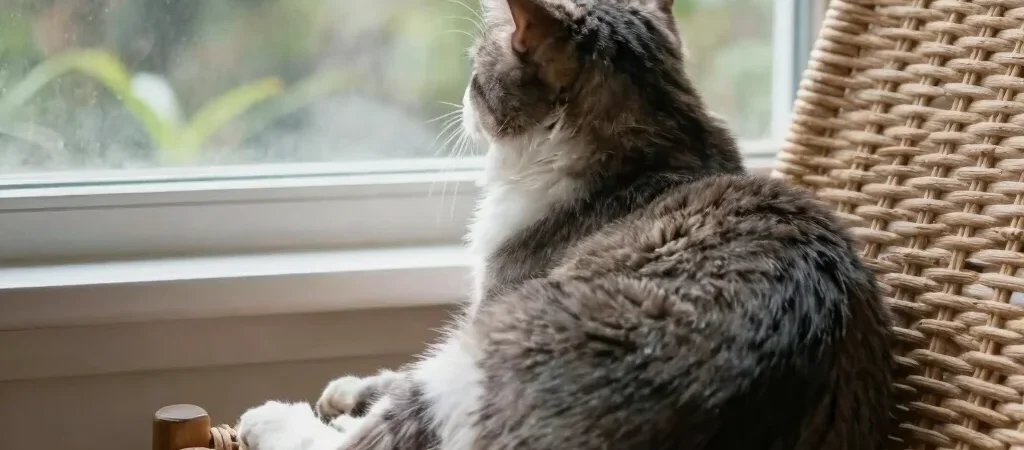
Your cat is stretched beside you, eyes half closed, while the tip of its tail gives a quick flick. It is tempting to treat that movement as a clear yes or no. A tail is useful information, but it makes more sense alongside posture, ears, attention, and the situation around your cat.
Look beyond one signal
A gently upright tail often appears when a cat is moving through a familiar space or greeting someone. A low, tucked, puffed, or rapidly swishing tail can accompany very different moods and circumstances. The important detail is the combination: is the body loose, crouched, turned away, or leaning toward you?
Pay attention to what happened just before the movement. A tail flick during focused window-watching may not mean the same thing as a tail flick during repeated petting. The room, the cat’s activity, and the other body cues help you read the moment more thoughtfully.
Let the cat set the pace
When you are unsure, pause your hand and give your cat a little space. If the cat leans in or stays relaxed, offer a brief touch in a place it usually enjoys, then pause again. That small break gives the cat a chance to move closer or choose to be done.
Children and visitors can use the same simple rule: notice first, then invite; do not follow a cat that walks away. Over time, you will learn the combination of cues that is typical for your own cat. Start with the whole scene, not the tail alone.